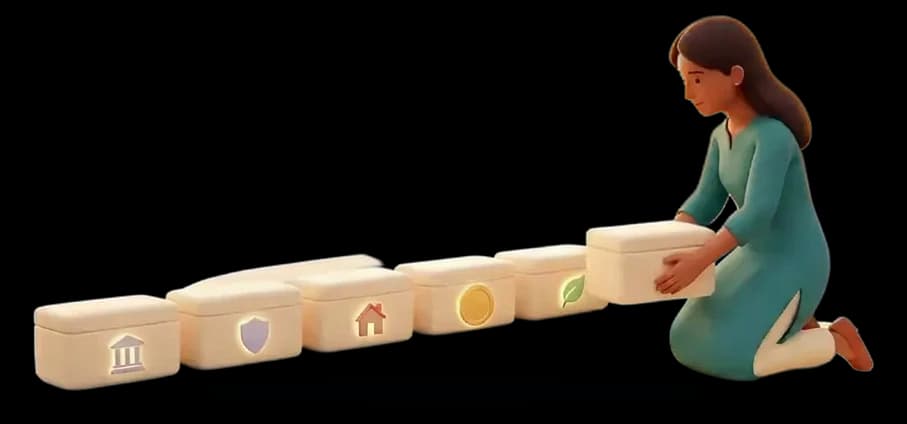
Financial Inventory
Record bank accounts, investments, insurance, property and more across 12 categories. Your family gets one organised list instead of scattered papers.

If something happens to you, your family will know what you own, where it is, and what you wanted. Take the free 3-minute quiz to see where things stand today. No sign-up needed.
Free to start • Passwords are encrypted on your device, so even we can't read them • A Nexivara product, built by Bindal Infotech, a software company since 2012
The cost of doing nothing
Money goes unclaimed in every country, often because no one knew it was there. In India, more than ₹72,000 crore of unclaimed bank deposits sat in the RBI's DEA Fund in January 2026. In the UK, £31 billion is in pension pots whose providers can't reach the owner. In the US, about 1 in 7 people have unclaimed money or property. When someone dies without leaving a clear record, their family is left to search.
Sources: government reply in Parliament on the RBI DEA Fund (India, 2026); Pensions Policy Institute, Lost Pensions 2024 (UK); National Association of Unclaimed Property Administrators (US).
From overwhelmed to organized
Sort My Legacy brings your finances, digital assets, will and family conversations into one guided platform. It works wherever you live, with amounts in your own currency. In India it also drafts your will under the Hindu Succession Act and covers Indian asset types and nominee rules. Start free. No credit card required.
Record bank accounts, investments, insurance, property and more across 12 categories. Your family gets one organised list instead of scattered papers.

Passwords, crypto, social media and subscriptions. Passwords are encrypted on your device. Leave your master password with your digital executor so they can open the vault later.

In India: a guided will draft under the Hindu Succession Act 1956 (Hindus, Sikhs, Jains, Buddhists). Everywhere else: store a copy of your existing will in your document vault so your family can find it. Lawyer review recommended.
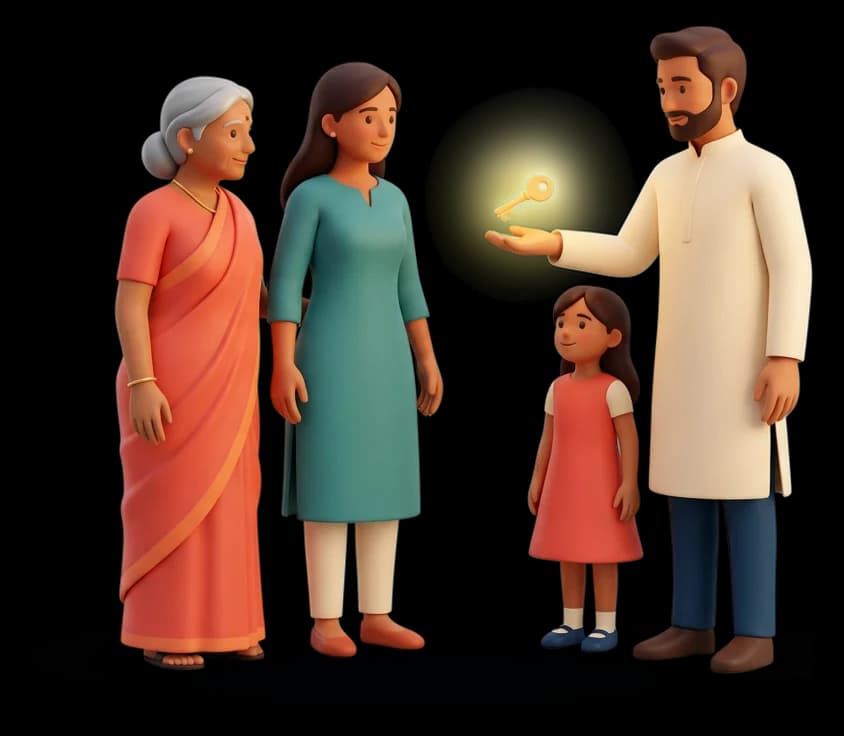
Choose who can see your plan, and when. Free includes one Executor, who sees it only after your death is confirmed. Paid plans add a Helper, who sees it now, and more people. Everyone gets read-only access.
Beyond the basics
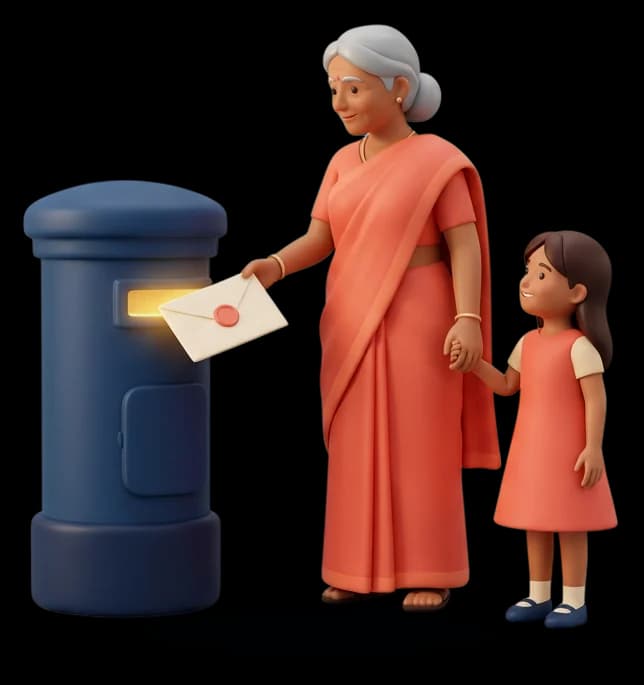
Write letters, or share a video link, for the people you love. We deliver them after your death is confirmed, or on a date you choose. Premium and above.

Document milestones and memories. Share your story with your family.

Sign-in can ask for a code from an authenticator app, with backup codes in case you lose your phone. Vault passwords are encrypted on your device.
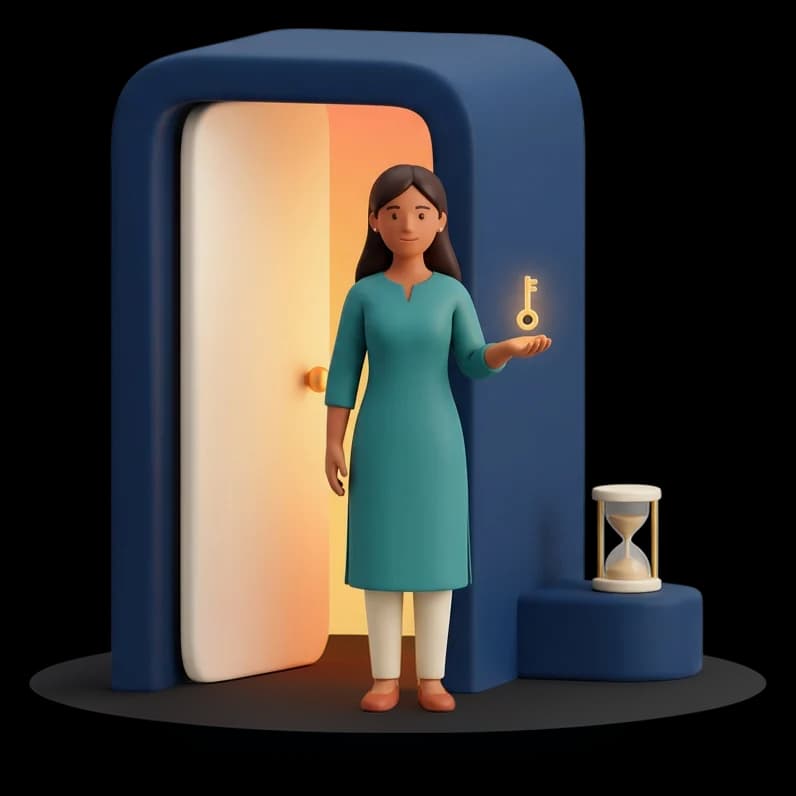
People in your Family list can ask for access in an emergency. You have 72 hours to say yes or no.

If you don't sign in for 3, 6 or 12 months (you choose), we check in by email or WhatsApp. If you still don't respond, we let your Trusted Contacts know.

File each document under a category and attach it to the asset it belongs to. Your family finds the policy paper right next to the policy.

A checklist shows what is done and what is still missing, so you always know the next step.
Once a year we remind you to check nominees, your will and documents, so nothing stays out of date after a marriage, a birth or a move.
How it works
You can do it over a couple of weekends, or take longer. Your progress is saved, so stop and come back whenever you like.
Step 1
7 questions, 3 minutes, free. See which plan fits your situation. No sign-up needed.

Step 2
12 categories with guided input. Your family gets one organised list instead of scattered papers.

Step 3
In India, draft your will step by step under the Hindu Succession Act 1956. Elsewhere, add the will you already have to your vault. Lawyer review recommended.

Step 4
Conversation scripts and a family letter template. Leave them prepared, not guessing.
If something happened to both of you, the law, not you, could decide who raises them. See how to name a guardian.
Frequently asked questions
The will builder is for India: it makes a draft under the Hindu Succession Act 1956 (Hindus, Sikhs, Jains, Buddhists). Drafts for Muslim Personal Law and the Indian Succession Act 1925 (Christians, Parsis, civil marriage) aren't ready yet, and we don't make drafts for other countries, because a will has to follow the law where you live. Anyone can store their existing will in the document vault. We always recommend a lawyer review before signing, particularly for immovable property, business interests, or overseas assets.
Passwords you save in the vault are encrypted on your device before they reach us, so we cannot read them. Everything else is encrypted when stored and when it travels over the internet. You can also turn on two-step sign-in with an authenticator app in Settings. The Security page has the technical detail.
Yes. Start with the free quiz and document up to 10 assets. The Free plan also lets you name one Executor, who can see your plan after you. Adding more family needs a paid plan. No credit card required to begin.
Take the free quiz: 7 questions, 3 minutes. It suggests the plan that fits your situation. No commitment.
Yes: the people you add in Family Access (the Free plan includes one, your Executor). When someone reports your death and uploads the death certificate, we email you and wait at least 7 days, so you can tell us if it's a mistake. If you don't, the report is confirmed and the Executor you named in Family Access can see your plan, read-only.
At least once a year, or immediately after major life events: marriage, a child, relocation, major asset changes, or a death in the family. Sort My Legacy nudges you annually.
3 minutes to find out where you stand. Free to start. No credit card required. Cancel auto-renewal anytime.
